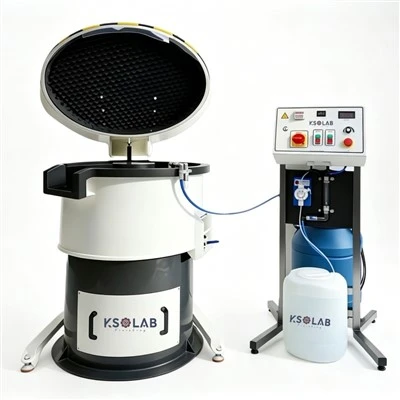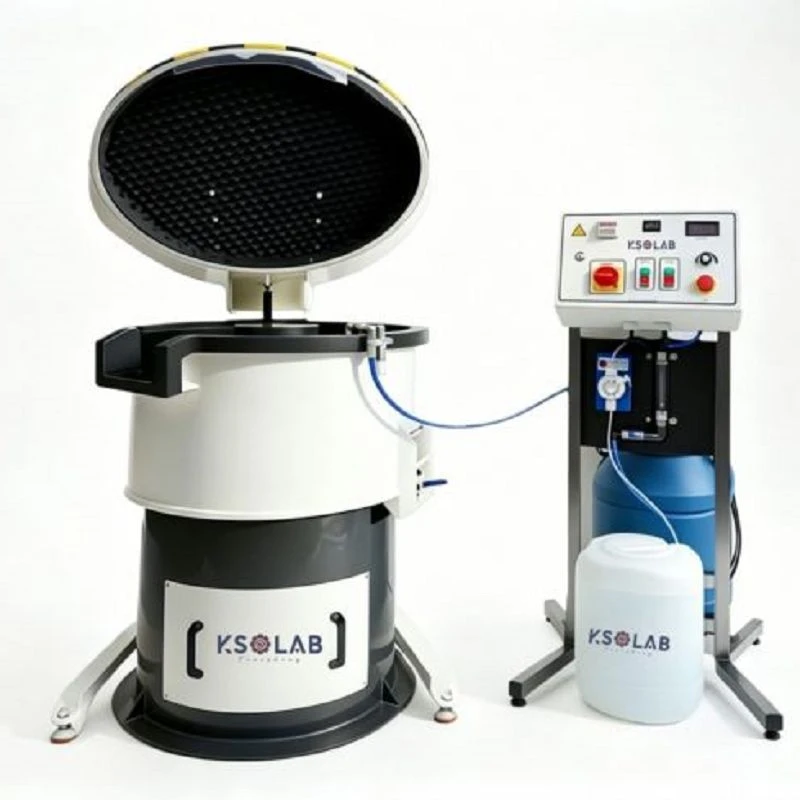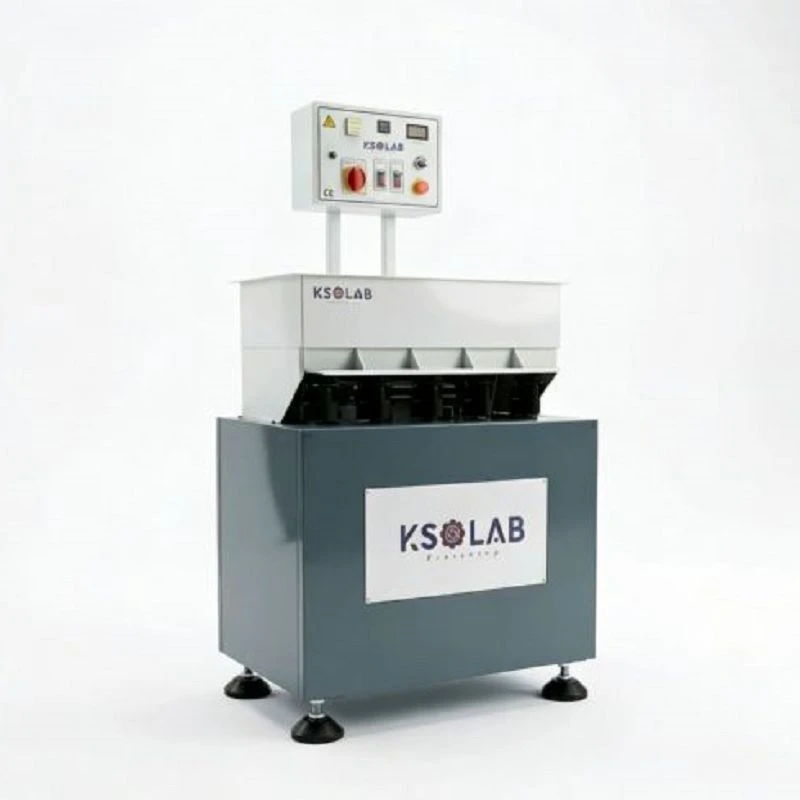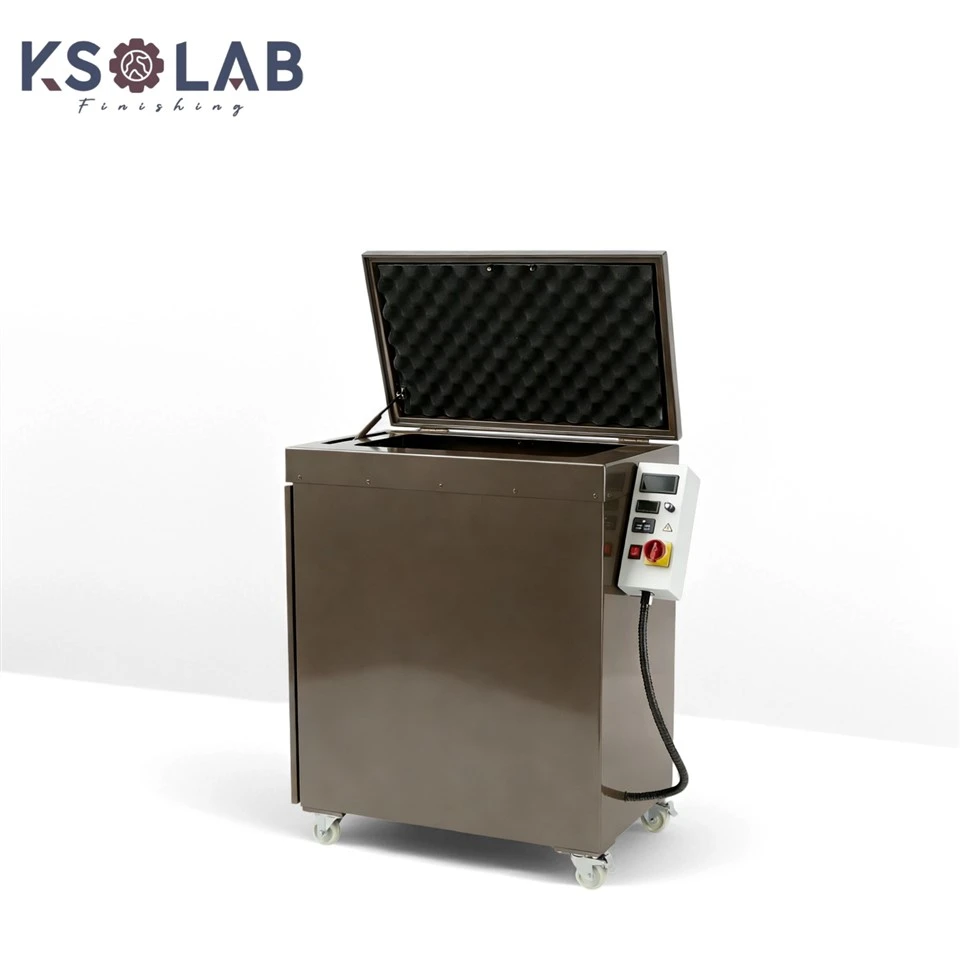
To achieve stable and lasting results when using a vibratory polisher, please pay attention to the following points:
Choose the right polishing stones.
The shape, size, and material of the polishing stones directly affect the results:
For deburring: Use ceramic triangular or oblique triangular polishing stones for strong cutting force.
For polishing: Use high-frequency ceramic, plastic, or stainless steel beads for gentle cutting force.
For workpieces with holes or grooves: Use smaller conical polishing stones to ensure access to hard-to-reach areas.
For soft materials: Do not use sharp or coarse polishing stones to avoid scratches.
The polishing fluid is crucial.
Use low-foaming or non-foaming polishing fluid. Ordinary detergents will produce excessive foam, reducing polishing efficiency.
Select the appropriate fluid based on the material: Stainless steel, copper, aluminum, etc., have their own dedicated polishing fluids.
The water ratio is generally 1/3 to 1/2 of the polishing stone volume, with the water level just covering the workpiece and abrasive.
Proper Loading:
The material (workpiece + grinding stones) in the grinding tank should ideally fill 60%-80% of the tank volume.
The workpiece to grinding stone ratio is commonly 1:2 to 1:5 (volume ratio), adjusted according to workpiece size and burr severity.
Insufficient loading can cause workpieces to collide and be damaged; excessive loading results in insufficient tumbling and incomplete treatment of hard-to-reach areas.
Control Polishing Time:
The required polishing time varies greatly depending on the material and initial condition (ranging from 10 minutes to several hours).
It is recommended to start with a short trial polishing time, checking every 15 minutes, and stopping immediately once the desired effect is achieved.
Excessive polishing time may lead to workpiece dimensional deviations or over-grinding.
Regular Screening and Replenishment of Polishing Media:
Grinding stones will wear down and lose their cutting power. It is recommended to separate fine waste stones with a sieve every 1-2 weeks and replenish with 20%-30% new grinding stones.
Polishing needles and grinding stones should be stored separately to avoid cross-contamination.
Pay attention to drainage and cleaning.
Grinding waste liquid contains metal dust and oil, and should be connected to an environmental treatment system.
After polishing, rinse the workpiece and grinding stones with clean water. If necessary, perform ultrasonic cleaning or passivation treatment.
Residual sludge in the vibratory tank should be cleaned regularly (it can be run unloaded with clean water and cleaning agent for 10 minutes).
Equipment maintenance is essential.
Regularly check whether the bolts of the vibratory motor are loose and whether the shock-absorbing springs or rubber blocks are aged.
Clean the drain outlet after each use to prevent blockage.
When not in use for a long time, wipe the equipment dry and apply rust prevention measures.