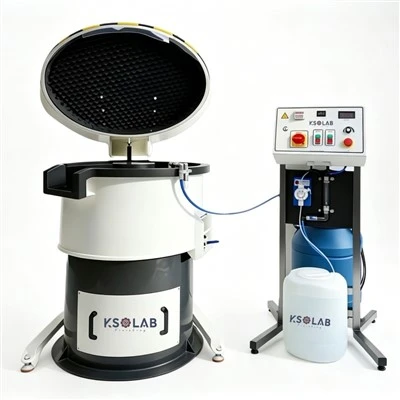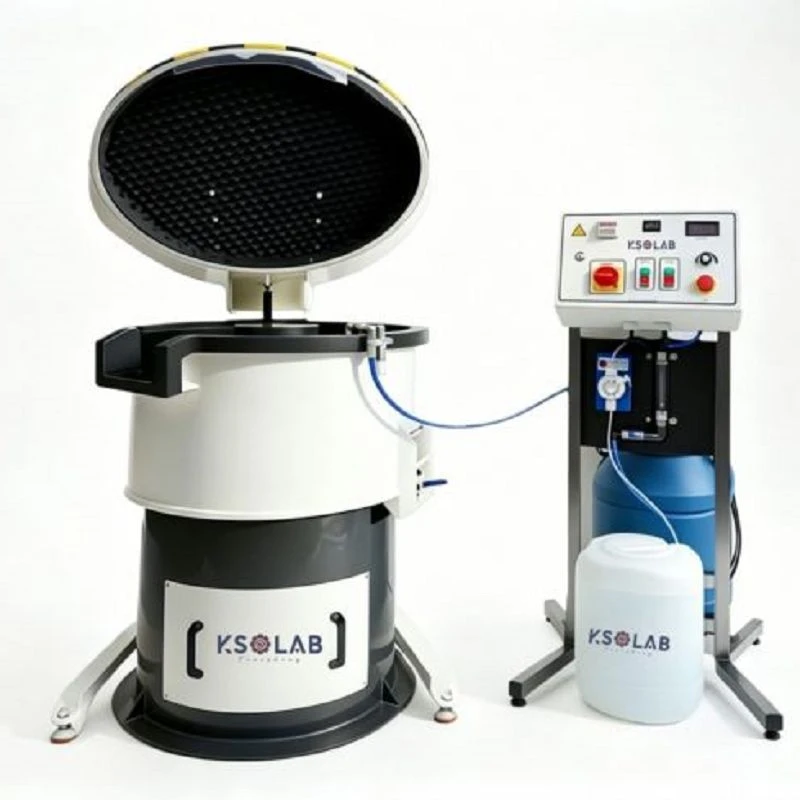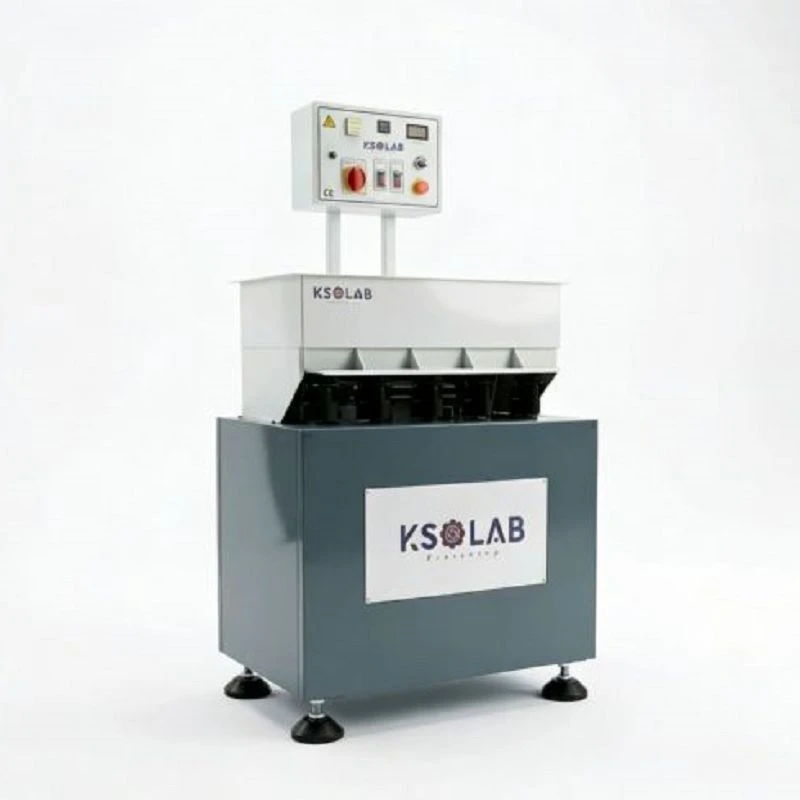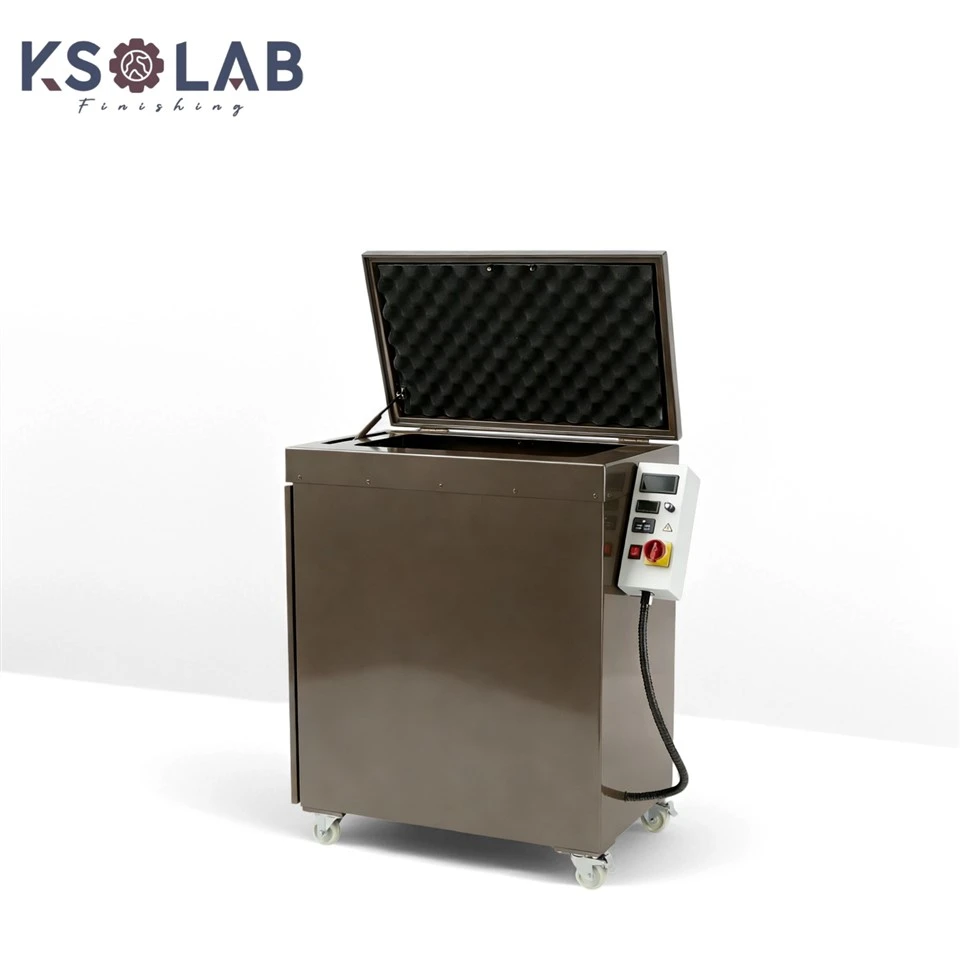
A magnetic polishing machine has a disk built into the bottom of the polishing tank that rotates, alternating between the N and S poles. In this rapidly and uniformly changing magnetic field, the magnetic needle media (hereinafter referred to as 'needle media') are influenced by magnetic field lines of varying strengths near different poles. While being attracted, they undergo instantaneous chain-like motion, alternately connecting and reversing to the N and S poles.
The individual movements of the needle media are irregular and cannot be visually confirmed because they rotate at high speed in the cleaning fluid. However, the irregular movements of the individual needle media create complex water flows across the width of the container. Then, within these complex water flows, the needle media come into contact with the outer and inner surfaces of the workpiece tens or hundreds of thousands of times. This contact makes it possible to deburr and polish the interior of pipes and split sections, as well as inaccessible details-something extremely difficult to achieve with conventional polishing and grinding machines.