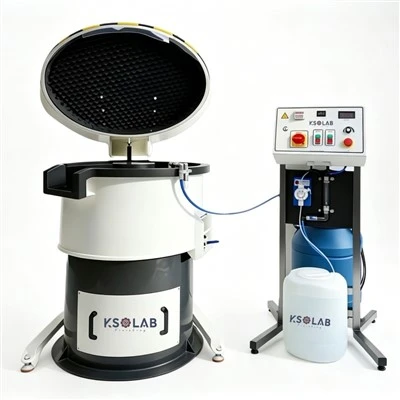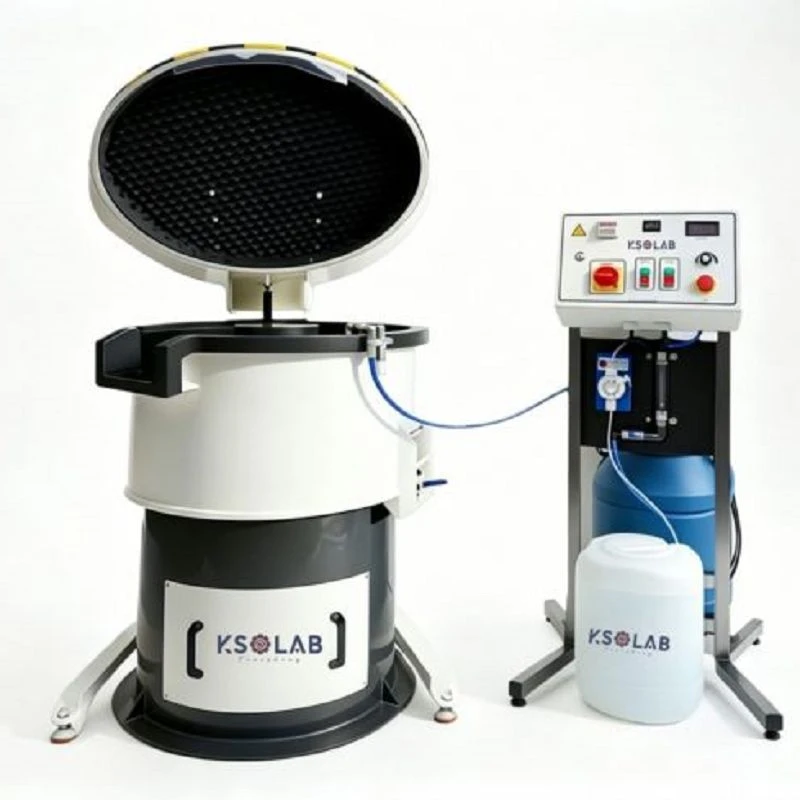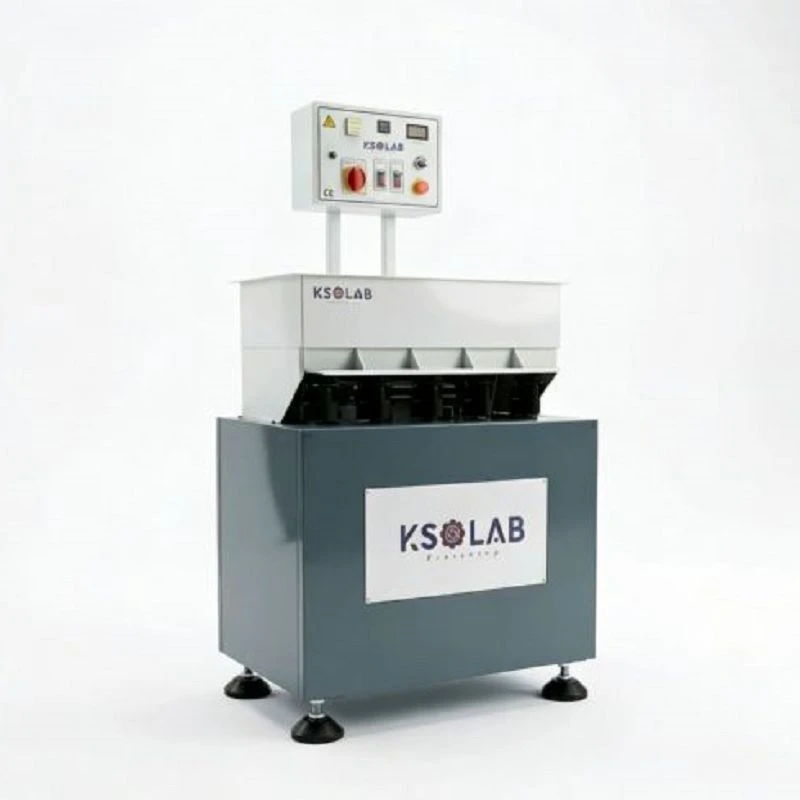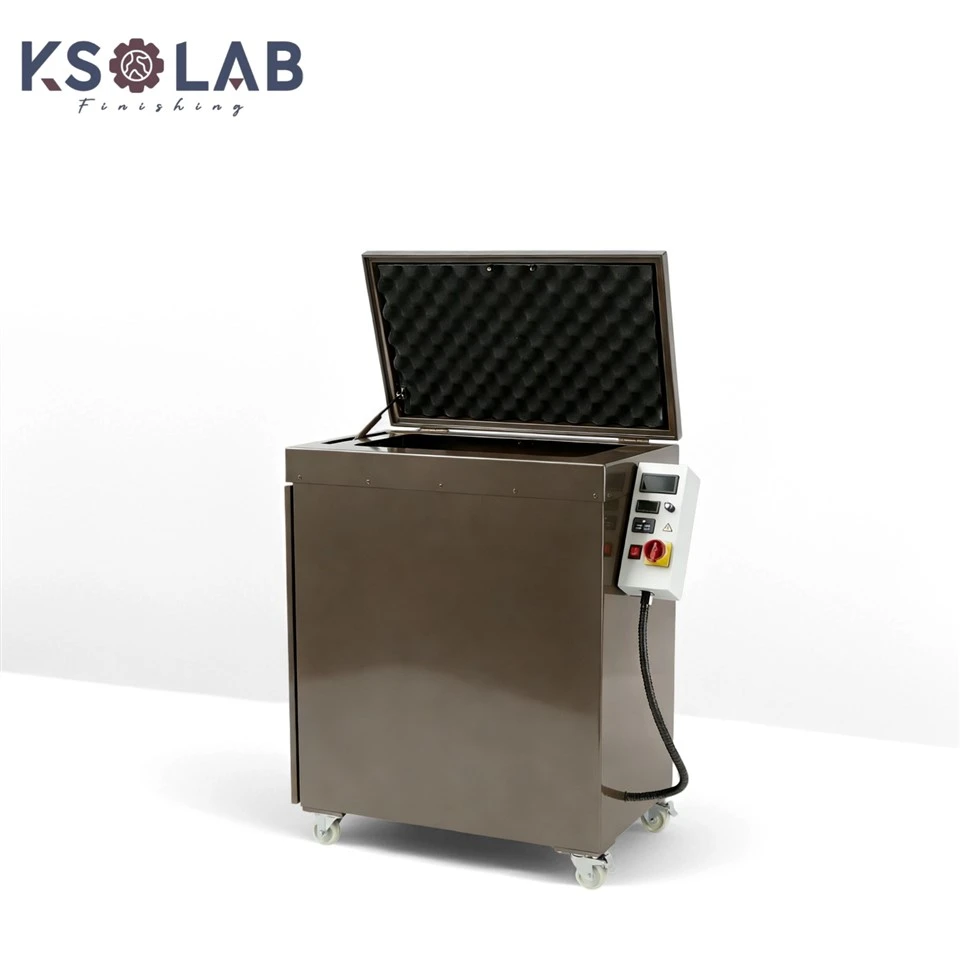
As a manufacturer of magnetic polishing machines, Guangu Technology's official website receives numerous customer inquiries daily. One frequently asked question is: "I see your website lists both 'magnetic polishing machines' and 'magnetic grinding machines.' Which one is right for my needs?" This question reflects the confusion many customers have about the functions and applications of these machines. Today, we'll discuss the ins and outs of "magnetic polishing machines" and "magnetic grinding machines."
Magnetic Polishing Machines and Magnetic Grinding Machines: Essentially the Same Machine with a "Dual Identity"
Many customers interpret the terms literally: "polishing" means making a surface brighter, and "grinding" means removing burrs. Therefore, they perceive them as two different types of equipment. However, as the manufacturer, we can clearly state that magnetic polishing machines and magnetic grinding machines are essentially the same machine.
Their working principle is completely identical: an adjustable rotating magnetic field is generated within the equipment, causing the grinding steel needles (or "magnetic needles") inside the container to rotate and tumble at high speed. At this point, the metal workpiece is placed in the container, and the moving steel needles act like countless "miniature brushes," impacting, rubbing, and cutting the workpiece surface from all directions, thus achieving a surface treatment effect.
Why are there two names: "polishing machine" and "grinding machine"?
Since it's the same machine, why two names? This mainly stems from the "dual nature" of the equipment's function-it can perform both the removal function of "grinding" and the aesthetic function of "polishing." The specific name often depends on the customer's application scenario and emphasis.
When the focus is on "removing burrs and oxide layers," it is often called a "magnetic grinding machine."
For metal workpieces after processing, the surface often has burrs (such as those from machining, die casting, and stamping), oxide scale, rust, or minor scratches. In this case, the main task of the equipment is to "remove" these surface defects, restoring the workpiece to basic dimensional accuracy and surface cleanliness. In this application scenario where "material removal and surface finishing" are the core functions, customers usually call it a "magnetic grinding machine."
For example, removing burrs from gates of die-cast aluminum alloy parts, deburring stainless steel machined parts, and removing oxide layers from copper parts are typical applications of the "grinding" function. By adjusting parameters such as magnetic field strength, steel needle size (coarse steel needles remove burrs faster), and grinding time, these "finishing" tasks can be completed efficiently.
When the focus is on "enhancing gloss and aesthetics," it is often called a "magnetic polishing machine."
Some workpieces have few surface defects but require enhanced gloss (such as a bright or matte finish) or decorative finish. In this case, the main task of the equipment is to "refine surface roughness," transforming the workpiece from a "rough" surface to a "smooth" one. In this application scenario centered on "enhancing aesthetics and refining surface texture," customers typically refer to it as a "magnetic polishing machine."
For example, polishing metal jewelry (such as necklaces and bracelets), surface treatment of 3C electronic components (such as mobile phone frames and watch cases), and surface brightening of medical devices are typical applications of the "polishing" function. By using finer steel needles (such as fine steel needles or polishing needles) and polishing fluids (such as brighteners), a high-gloss or even mirror-like finish can be achieved on the workpiece surface.
Key Conclusion: Don't get hung up on the name; the key is "what effect does your workpiece need?"
By now, you should understand that magnetic polishing machines and magnetic grinding machines are essentially the same device, just with different names due to different applications and functional focuses. Like a "multi-functional knife," it can be used to "peel fruit" (polishing) and also to "shave wood chips" (grinding), but the tool itself is the same.
Therefore, when choosing equipment, don't worry about the name "polishing machine" or "grinding machine." What you need to focus on is: what problem does your workpiece need to solve?
If it's to remove burrs, oxide layers, or rust, requiring "grinding and finishing," choose a magnetic grinding machine of the corresponding specifications (i.e., the same model of equipment, focusing on grinding parameters);
If it's to enhance gloss, achieve a bright or decorative effect, requiring "polishing and beautification," choose a magnetic polishing machine of the corresponding specifications (i.e., the same model of equipment, focusing on polishing parameters). As a manufacturer, each of Guangu Technology's machines can be flexibly adapted to both "grinding" and "polishing" needs by adjusting parameters (working frequency, steel needle type, grinding time, additives, etc.). If you are unsure which solution is suitable for your workpiece, simply contact us, providing the workpiece material, dimensions, current surface problems, and target effect. Our technical team will recommend the most suitable equipment configuration and process solution for you.