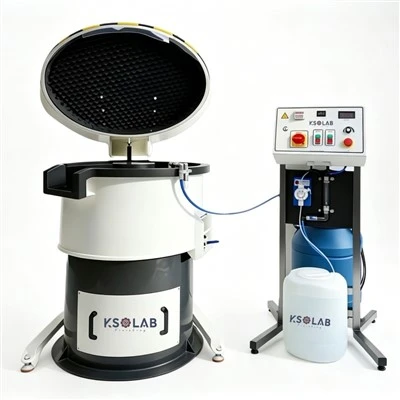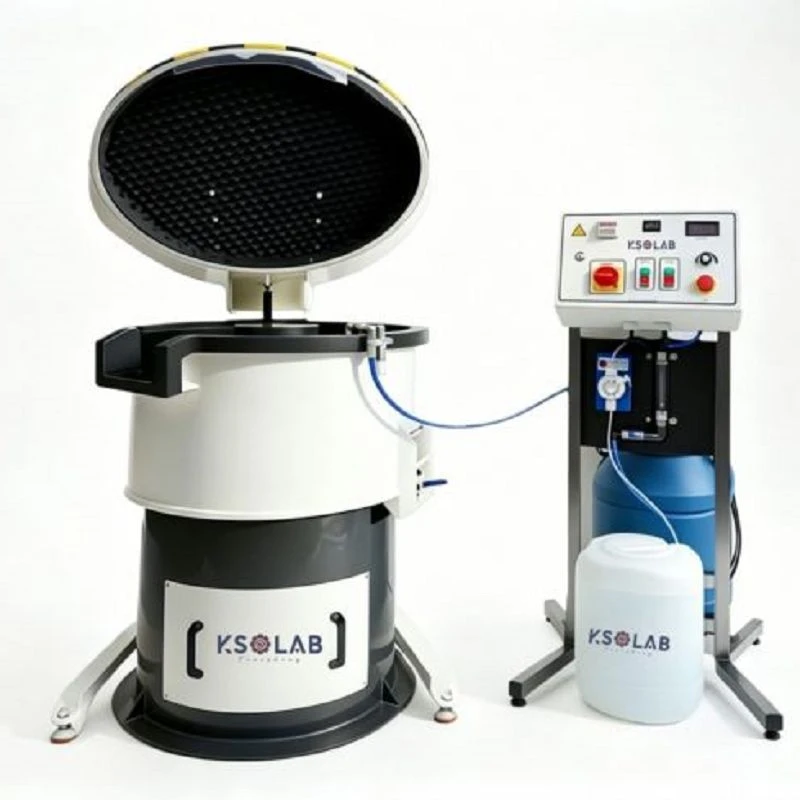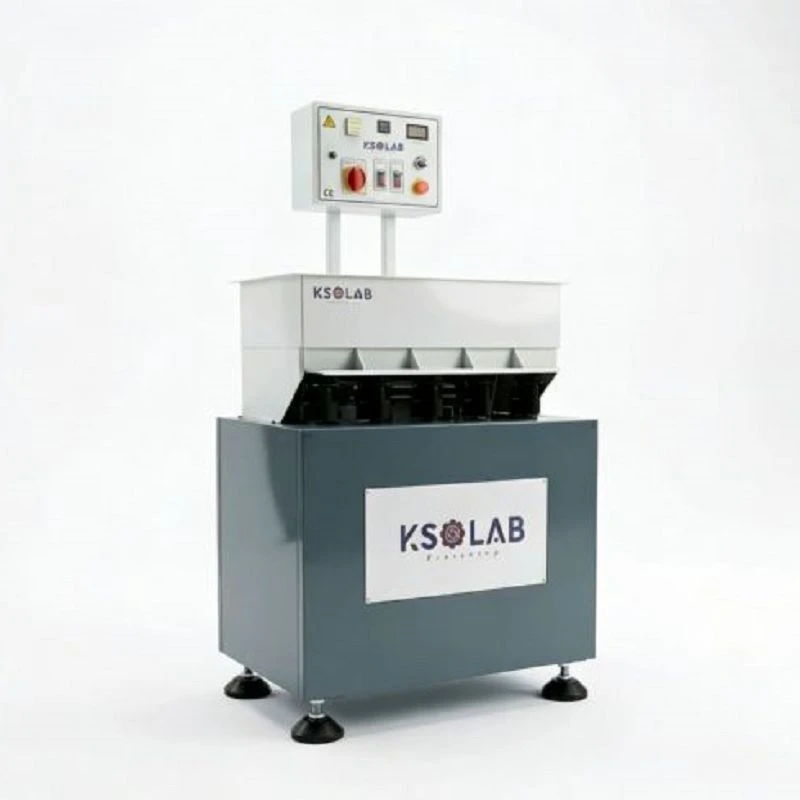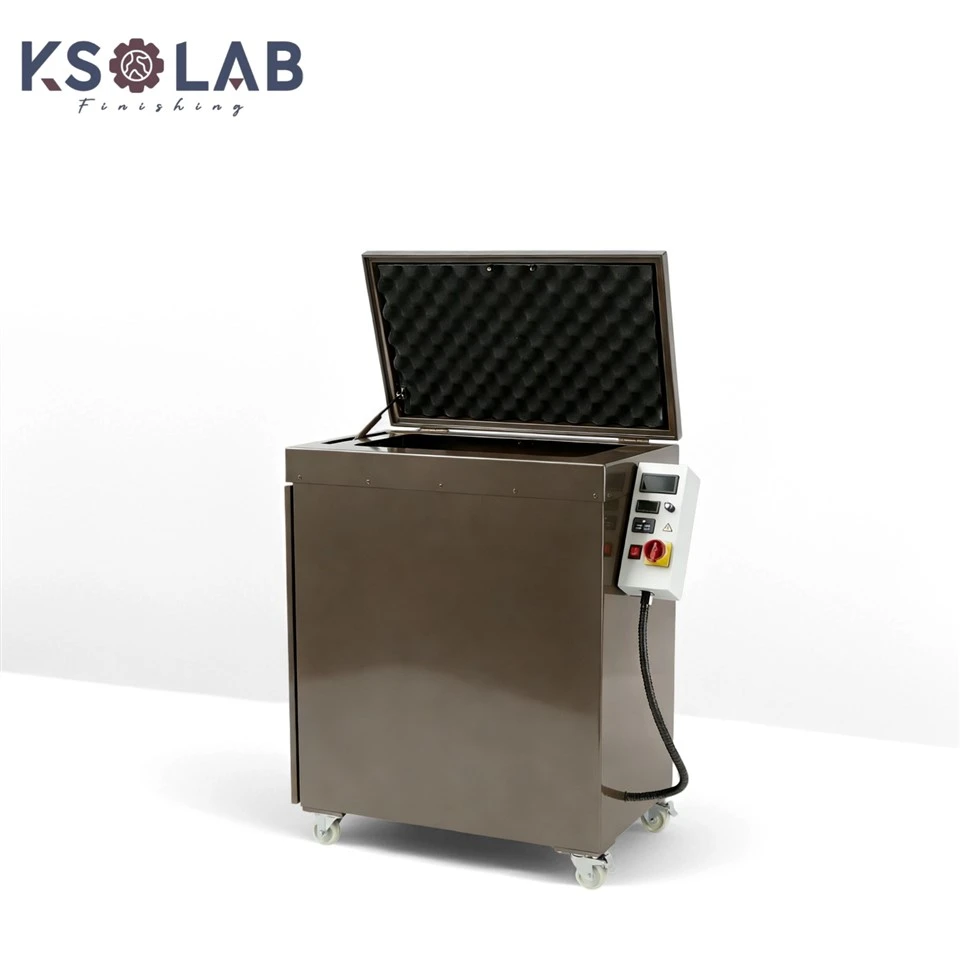
Vibration Generation and Transmission: The core component is a vibratory motor, typically driven by a pair of unbalanced eccentric blocks. When the motor operates, the rotation of the eccentric blocks generates an unbalanced centrifugal force, causing the polishing chamber to vibrate. The vibration frequency and amplitude can be adjusted to suit different polishing requirements.
Interaction between the Polishing Medium and the Workpiece: During vibration, the workpiece (e.g., metal parts, plastic parts) and the polishing medium (e.g., polishing beads, abrasive particles) are agitated together. Under the influence of vibration, the polishing medium forms a liquid or solid state within the chamber, rubbing, colliding, and grinding against the workpiece surface. Through continuous friction and impact, impurities, oxide layers, or rough layers are gradually removed from the workpiece surface, ultimately forming a smooth, glossy surface.
Control of the Polishing Process: The process is influenced by multiple factors, including vibration frequency, amplitude, polishing time, and the type and particle size of the polishing medium. By properly controlling these parameters, optimal polishing results can be obtained under different processing requirements. Different workpiece materials and surface requirements may necessitate adjustments to different process parameters to achieve the desired surface quality.